

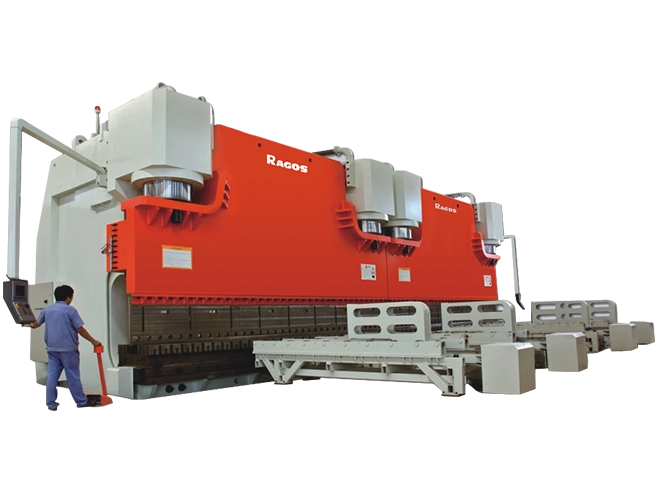




Freno de presión de alta resistencia para chapa de acero: Cómo especificarlo correctamente
Curvar la placa de acero es un proceso de alta energía que difiere fundamentalmente del trabajo en chapa metálica. Mientras que el doblado de láminas se centra en la estética superficial y la precisión, La formación de placas requiere una penetración profunda por esfuerzo para superar la resistencia masiva a la deformación por grosor de secciones pesadas.
Especificar un freno de presión de alta resistencia no consiste solo en elegir un número alto en una tabla de tonelaje; se trata de adaptar la arquitectura estructural de la máquina al comportamiento físico del metal. Si la máquina no puede manejar el comportamiento de desplazamiento del eje neutro de la placa,, La alta presión de contacto resultante en la formación de carga inevitablemente provocará fatiga del bastidor o fallos catastróficos de las herramientas.
- Placa vs. Hoja: La placa requiere deformación plástica completa a lo largo de todo el grosor, No solo en la superficie.
- Integridad estructural: El bastidor de la máquina debe gestionar el camino de energía para evitar torsiones bajo cargas descentradas.
- Riesgo de especificaciones: Especificar poco conduce a "banana" Doblas o troqueles agrietados que pueden suponer riesgos para la seguridad.
- Ajuste de fuerzas: El tonelaje debe calcularse con un amortiguador de seguridad que tenga en cuenta las variaciones en la resistencia al límite elástico del material.
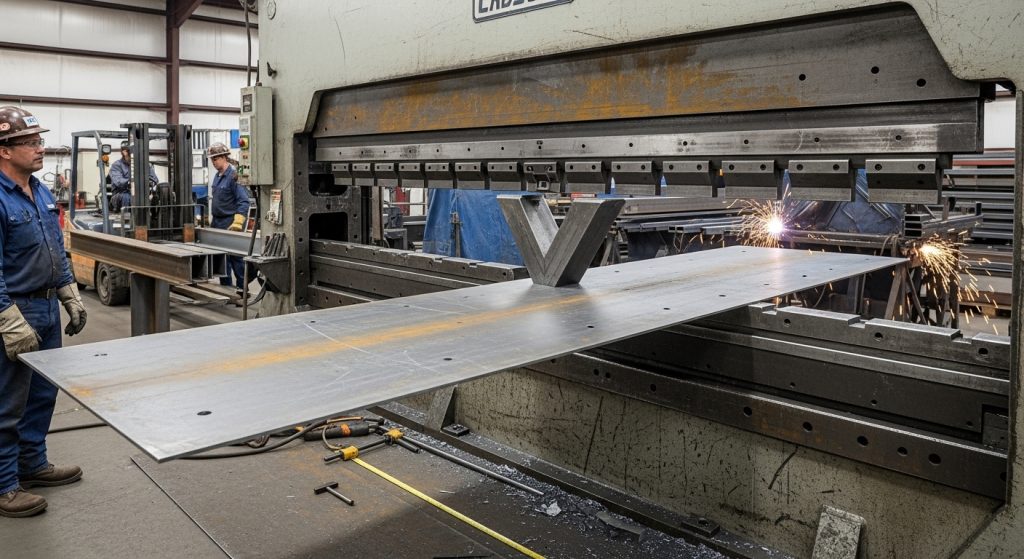
Donde los frenos de presión de alta resistencia se vuelven obligatorios para el trabajo con chapa de acero
Las máquinas estándar a menudo fallan cuando se introducen en la capa gruesa de formación de la placa de sección. Los modelos de alta resistencia son obligatorios cuando la resistencia a la carga estructural del material supera los límites elásticos de los bastidores estándar. En estos escenarios, La zona de concentración de tensión en el borde de la placa es tan intensa que los componentes estándar se deformarían permanentemente.
- Construcción naval y marina: Formando enormes placas de casco y mamparos internos.
- Infraestructura: Crear segmentos estructurales de viga y componentes de puente donde la integridad de la placa no es negociable.
- Maquinaria pesada: Fabricación de chasis para maquinaria minera y de construcción que operan dentro de un estrecho Ventana de deformación de sección gruesa.
La fabricación verdaderamente resistente requiere una máquina diseñada para constantes, Ciclos de alta carga en los que la vida útil del chasis se calcula en décadas, No solo unos pocos miles de golpes.
Cómo el grosor de la placa de acero determina los requisitos de tonelaje de frenos de presión de alta resistencia
La fuerza necesaria para doblar la placa de acero aumenta exponencialmente con el grosor. El Multiplicador de fuerza de espesor de sección significa que duplicar el grosor de la placa requiere mucho más que duplicar el tonelaje. Los ingenieros deben usar un Rango de amortiguador del factor de seguridad de carga para tener en cuenta el "Endurecimiento por trabajo" que ocurre durante el ictus.
Tabla de escalada de la fuerza de placas (Aproximado para acero S355)
| Grosor de la placa (milímetro) | Apertura en V recomendada (milímetro) | Tonelaje por metro (T/m) | Gradiente de fuerza |
| 12mm | 100mm | 85T | Línea base |
| 20mm | 160mm | 145T | Aumento de 1,7x |
| 30mm | 250mm | 210T | Aumento de 2,5 veces |
| 50mm | 400mm | 350T | Aumento de 4,1x |
La fórmula básica para la estimación es $F = frac{k cdot S cdot L cdot t^2}{V}$, donde $F$ es fuerza, $t$ es el grosor, y $V$ es la apertura del dado. A medida que $t$ aumenta, el Gradiente de escalada de la fuerza formando se convierte en el factor principal en la selección de la máquina.
Arquitectura de máquina que separa los verdaderos frenos de presión de alta resistencia de los modelos estándar
Un freno de presión de alta resistencia se define por su Rigidez del camino de carga del bastidor. A diferencia de los modelos más ligeros, La cama y el RAM son significativamente más profundos para proporcionar Geometría de compensación de deflexión del lecho. El Simetría de carga de cilindros hidráulicos asegura que incluso bajo presión máxima, La fuerza se distribuye de manera uniforme entre las guías de ariete.
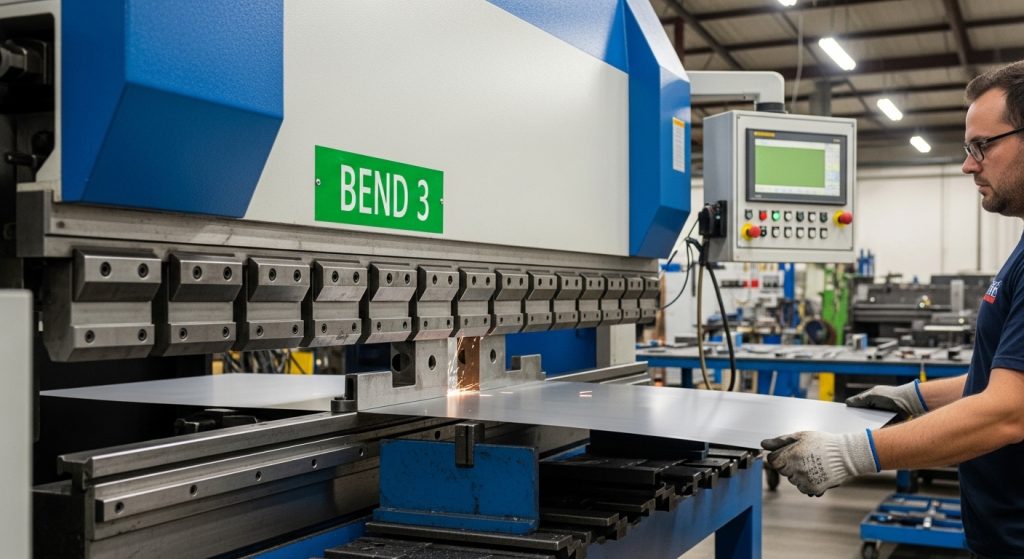
- Rigidez del bastidor: Las carcasas laterales sobredimensionadas y las profundidades profundas permiten bridas grandes sin sacrificar Control de carga paralela de RAM.
- Diseño de cilindros: Sellos de alta resistencia y pistones de alta presión diseñados para ciclos de trabajo industriales las 24 horas del día, los 7 días de la semana.
- Refuerzo de cama: Grandes losas de acero soldadas y aliviadas de tensión para soportar las cargas puntuales concentradas de los grandes troqueles en V.
- Coronado Integrado: Sistemas activos que reaccionan al tonelaje específico de cada carrera para mantener una línea de curva recta.
Ingeniería de herramientas para chapa de acero en frenos de presión de alta resistencia
El trabajo de herramientas para chapa pesada se trata de todo Dispersión de la carga de apertura del troquel. Usar un dado demasiado estrecho aumenta Resistencia a la presión de contacto de la herramienta Requisitos que superan los límites del acero estándar para herramientas, conduciendo a Interfaz de resistencia de agallado superficial Fracaso.
| Tipo de material | Radio de punzón | La apertura (V) | Nivel de riesgo |
| Acero dulce | 1 dólar.0 veces t$ | $8–10 veces t$ | Bajo |
| Alta Resistencia (S700) | 3 dólares.0 veces t$ | $12 veces t$ | Medio |
| Resistente al desgaste (AR450) | 5 dólares.0 veces t$ | $12–15 multiplicado por t$ | Alto |
El Control del radio de tensiones de la nariz de puñetazo es fundamental; Un puñetazo fuerte sobre una placa pesada actúa como un cuchillo, iniciando una grieta en el material en lugar de una curvatura.
Por qué los sistemas de coronado se vuelven críticos en la flexión pesada de placas
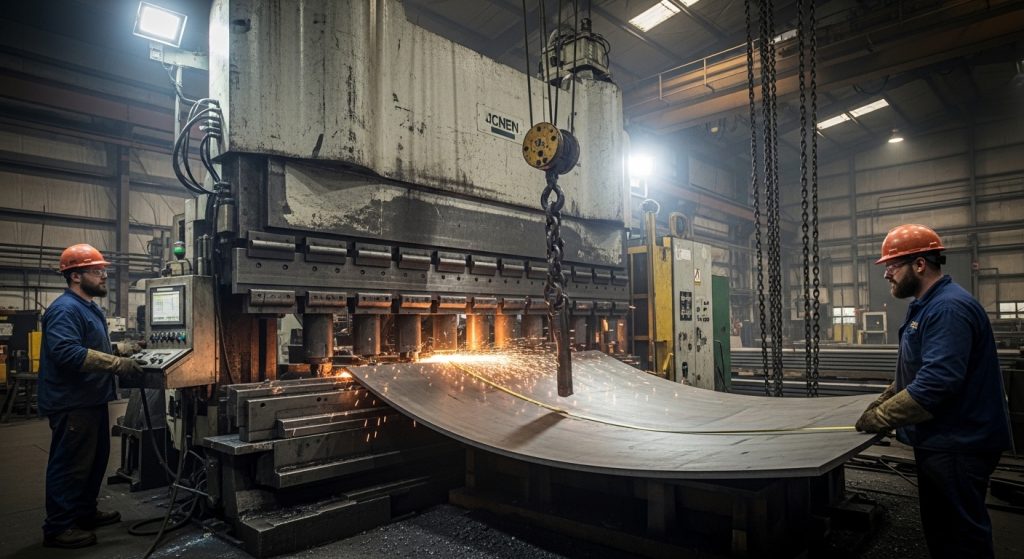
Mientras el ariete presiona hacia abajo, La cama y el ram se separan naturalmente en el centro—esto es el Curvatura de deflexión elástica del lecho. Sin corrección, La placa tendrá un ángulo más amplio en el centro que en los extremos. A Modulación dinámica de presión de corona el sistema compensa esto ligeramente "Arco" La cama hacia arriba.
Éste Control de compensación de curvatura de envergadura total es vital para el trabajo con placas porque las fuerzas son tan altas que el calzo manual es imposible. Sin ella, el Corrección del gradiente de variación de ángulo se convierte en un cuello de botella, Lo que requiere un retrabajo costoso y largo o un rectificado secundario.
Sincronización multicilindro y por qué es importante por encima del alto tonelaje
En máquinas de alto tonelaje, Mantener una RAM nivelada es cuestión de Supresión de desviación por inclinación del RAM. Si un lado de la placa es un poco más duro que el otro, La resistencia será desigual. A Armonización sincronizada de presión de cilindro El sistema utiliza válvulas de alta velocidad para equilibrar el flujo al instante.
- Balance de caudal hidráulico: Asegura que la RAM se mueva perfectamente vertical independientemente de la carga descentrada.
- Distribución de vectores de carga: Gestiona las fuerzas para evitar que el ariete "Girando" Dentro de las guías.
- Estabilidad: Es fundamental para placas de gran formato, donde una desviación menor en el cilindro se traduce en un gran error en el borde de la placa.
Riesgos de fallo cuando los trabajos de placa de acero funcionan con frenos de presión por debajo de las especificaciones
Empujando una máquina más allá de lo previsto Excedencia de límite elástico por esfuerzo de referencia Límites crea Nucleación por microfatiga por grieta. Estas grietas suelen ser invisibles hasta que resultan en un Fallo por cizalladura por sobrecarga de herramienta o un chasis de máquina agrietado.
| Modo de fallo | Señales de advertencia | Consecuencia de la ingeniería |
| Fractura de la herramienta | Fuerte "crack" o sonido de ping | Escombros metálicos voladores (Peligro para la seguridad). |
| Fatiga del chasis | Deformación permanente del ariete/lecho | Pérdida de precisión de la máquina; Eventual rotura del marco. |
| Grietamiento de placas | Desgarros visibles en la superficie en la curvatura | Propagación de fracturas de placas; Pieza de alto valor desguazada. |
Funcionar constantemente al 95% de su capacidad es una estrategia de alto riesgo; Las mejores prácticas industriales sugieren mantenerse dentro del 80% del tonelaje nominal para trabajos con placas.
Lista de verificación de especificaciones: Cómo seleccionar un freno de presión de alta resistencia para placa de acero
Antes de finalizar una compra, asegurar que el Lista de verificación para la validación de cumplimiento de especificaciones Cubre estos fundamentos de la ingeniería:
- [ ] Requisito de tonelaje: Calculado para el material más difícil, No solo acero blando.
- [ ] Envolvente de carga: ¿La máquina tiene la altura abierta para tus grandes chips en V y bridas profundas?
- [ ] Compatibilidad de herramientas: Verificado Matriz de verificación de compatibilidad de herramientas para los grosores específicos de tus placas.
- [ ] Clase Estructural: ¿Es un "Servicio pesado" construido o simplemente un bastidor estándar con cilindros más grandes?
- [ ] Método de coronación: Sistema hidráulico activo o mecánico en cuña adecuado para cargas de placas.
- [ ] Ciclo de trabajo: Clasificado según el número de curvas por hora que requiere tu producción.
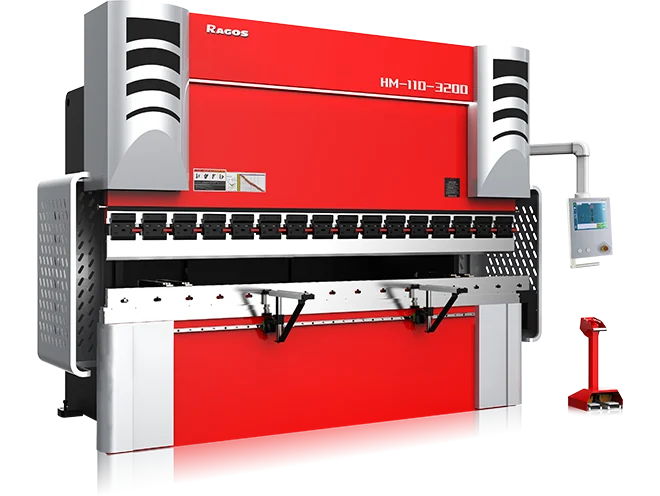
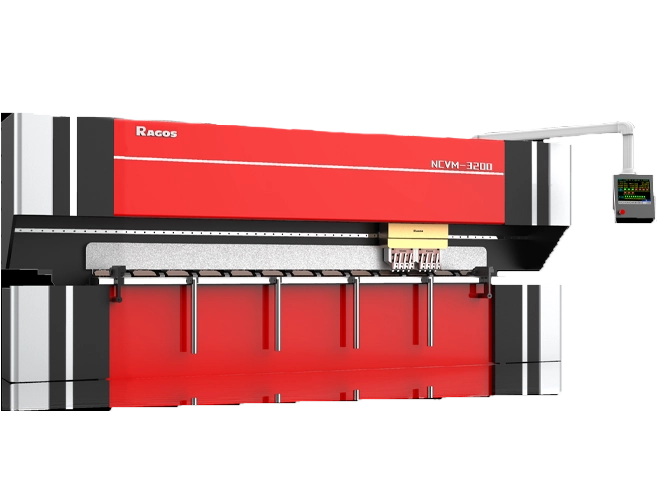
Selección Modelos de freno de presión de alta resistencia implica entender los límites de tu fabricación actual. Mientras que un Freno de presión de 3200 mm suele ser el estándar para el trabajo general de placas, Los proyectos más grandes suelen requerir el Freno de presión de 4000 mm para manejar longitudes prolongadas sin comprometer el tonelaje. Utilizando un Gráfico de capacidad del freno de presión es el primer paso en la planificación, Pero también debes tener en cuenta cómo Apertura del troquel cambia tonelaje; un chip en V más grande puede reducir la fuerza requerida pero aumentará la longitud mínima de la brida.