

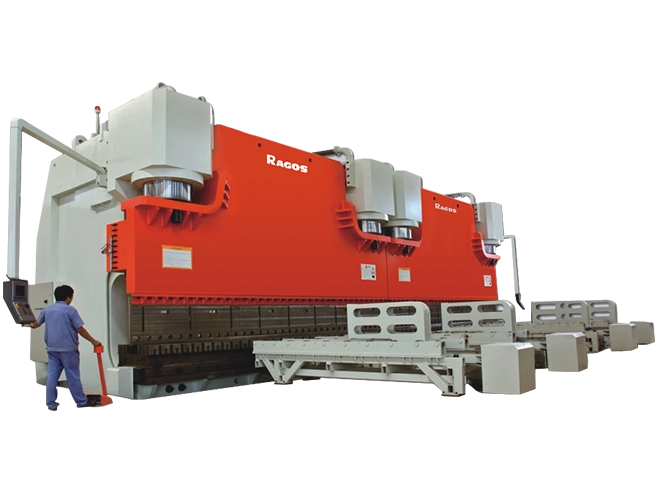




Freno de prensa CNC de 4000 mm: Cuando la longitud extra da frutos
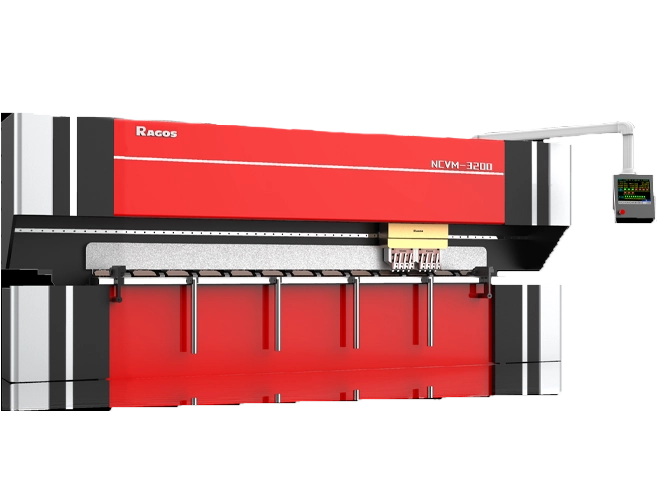
Las camas estándar de 2500 mm o 3200 mm suelen alcanzar sus límites físicos cuando se enfrentan a la demanda moderna de camas de unión, Componentes industriales a gran escala. Existe un freno de presión CNC de 4000 mm para eliminar el "Trampa de reposicionamiento"—el costoso e inexacto proceso de doblar piezas largas en múltiples etapas. Cuando la producción implica paneles que superan los 10 pies de longitud estándar, La cantidad extra de camas se convierte en una necesidad de gestionar Riesgo de tramo de chapa grande sin soporte.
Las máquinas más cortas suelen obligar a los fabricantes a tomar decisiones difíciles que comprometen Reto de uniformidad de curvas de borde largo o resultar en significativos Manejo de compensación de la hendidura de los paneles. Esta guía detalla cómo el traslado a una plataforma de 4 metros proporciona el Estabilidad de posicionamiento extendida en fogueo necesario para volver complejo, diseños de largo formato hacia la realidad de alta precisión.
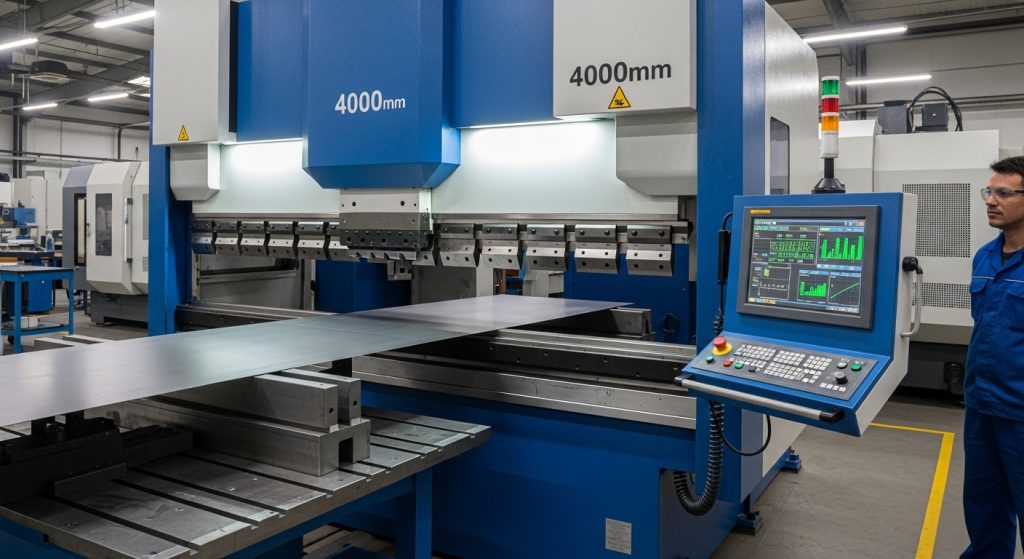
Deberías plantearte una mejora cuando:
- Estás doblando paneles arquitectónicos o carcasas de vehículos más largos de 3100 mm.
- Tu actual "doble flexión" El proceso está generando una tasa de chatarra del 15% o superior debido a errores de alineación.
- La fatiga del operador y los riesgos de seguridad están aumentando debido al manejo manual de las chapas que sobresalen.
- Necesitas ejecutar varias configuraciones de herramientas simultáneamente para terminar una pieza de una sola pasada.
donde las máquinas de freno de prensa CNC de 4000 mm eliminan el riesgo de formación de paneles largos
Doblar una lámina de 4 metros en una máquina con una cama más corta crea un "Formación de envolvente de estabilidad de zona" problema. Cuando el material se extiende mucho más allá de los marcos laterales, el peso del voladizo crea un Deriva de curvatura en blanco inducida por la gravedad, lo que provoca ángulos imprecisos y dobleces físicos en el metal.
- Inestabilidad de panel largo: Una cama de 4000 mm proporciona una Canal de transferencia de carga estructural que soporta el material a lo largo de toda su longitud, impidiendo que los extremos de "aleteo" durante el ictus.
- Riesgos de reposicionamiento: Usar una máquina de 3200 mm para una pieza de 4000 mm requiere dos golpes. Esto introduce un Error de referencia multiconfiguración, donde la segunda curva rara vez se alinea perfectamente con la primera.
- Ventajas de la Extensión Completa: Con 4 metros de soporte, Lo logras Supresión de distorsión por onda de bordes, asegurando que la brida permanezca recta de un extremo al otro sin "Enlatado de aceite" Efectos.
Escenarios reales de fábrica que obligan a los talleres a alcanzar una longitud de freno de prensa CNC de 4000 mm
La decisión de invertir en una máquina de 4 metros suele estar impulsada por contratos específicos de alto valor que las máquinas más pequeñas simplemente no pueden ejecutar de forma segura o rentable.
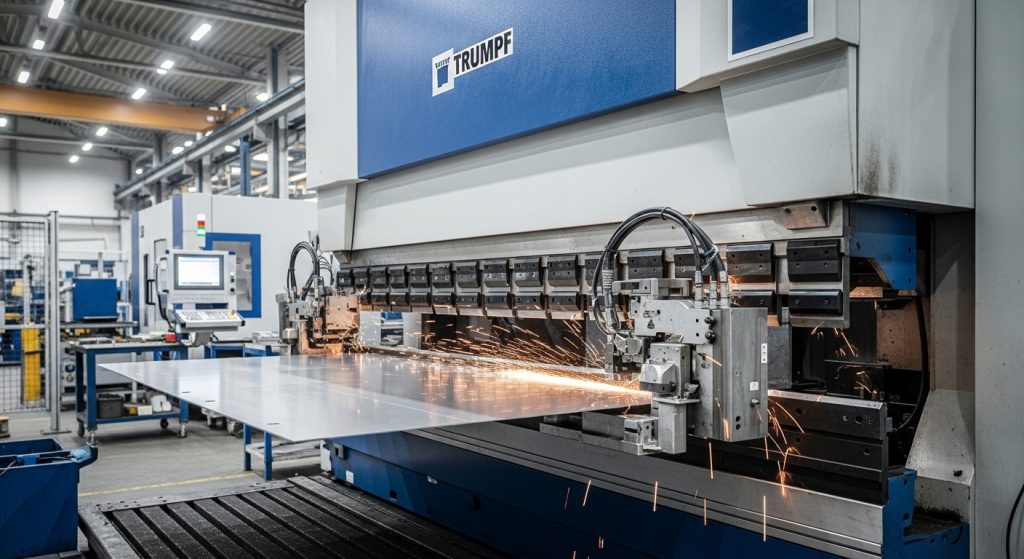
- Formación de piel lateral de la carrocería del vehículo: La fabricación moderna de autobuses y remolques requiere paneles laterales de hasta 4 metros para minimizar las juntas, lo que mejora la aerodinámica y la integridad estructural.
- Doblado de carcasas de muebles industriales: Las salas de control eléctrico a gran escala y los recintos de centros de datos suelen utilizar tramos verticales de 4 metros para reducir el tiempo de montaje.
- Fabricación de Estructuras de Cascas Metálicas: Los componentes del puente y los postes de iluminación requieren un Integración de ensamblaje de paneles pesados que solo una cama larga puede proporcionar.
- Fabricación de grandes secciones de conducto: Los sistemas HVAC de alto volumen para estadios o fábricas utilizan secciones de 4000 mm para minimizar el número de uniones, Reducción de fugas de aire y mano de obra de instalación.
Ejecutar estos trabajos en una máquina de 4000 mm garantiza un Equilibrio de formación de paneles largos que protege tanto al material como al operador del comportamiento impredecible del metal que sobresale.
El coste oculto de hacer funcionar piezas largas en camas de freno de presión más cortas
Muchos talleres creen que están ahorrando dinero al optar por máquinas de 3200 mm, pero el operativo "Fricción" el manejo de piezas largas en camas cortas supone un desgaste significativo en el resultado final.
| Factor de coste | Freno de prensa de cama corta | Freno de prensa CNC de 4000 mm |
| Reposicionar el trabajo | Alto (Se necesitan 2-3 operadores) | Minimal (1 operador apoya) |
| Precisión de flexión | Variable (Desviación de repetibilidad en curvatura) | Establo (Estabilidad del movimiento lineal del RAM) |
| Carga de herramientas | Concentrado (Punto caliente de presión de herramienta) | Distribución Uniforme (Propagación lineal de carga) |
| Tasa de desguace | Mayor debido a la deriva de alineación | Extremadamente bajo |
Intentando "Trampa" la longitud de una máquina da como resultado un Penalización por tiempo de reposicionamiento del operador eso puede duplicar el tiempo de producción por pieza. Además,, La presión concentrada sobre un montaje de herramientas cortas aumenta el riesgo de Formación de puntos calientes por presión de herramienta, lo que provoca fallos prematuros de la herramienta y desgaste desigual del ram de la máquina.
Cómo la longitud extra de la cama cambia la distribución real del tonelaje
En una máquina de 4000 mm, La fuerza no se refiere solo al total de toneladas; se trata de la Campo de presión de deformación distribuida. Diseñar una curva de 4 metros requiere entender la Camino de flujo de tensión en el marco de la máquina para evitar "Pico central" o "canoa" Efectos en la parte terminada.
El tonelaje requerido para una curvatura de 4000 mm puede estimarse usando la fórmula simplificada de curvatura del aire:
$$P = frac{1.42 cdot sigma_b cdot S^2 cdot L}{V cdot 1000}$$
- $P$ = Presión (Toneladas)
- $sigma_b$ = Resistencia a la tracción del material ($N/mm^2$)
- $S$ = Espesor del material ($mm$)
- $L$ = Longitud de flexión (4000 mm$)
- $V$ = apertura de dado V ($mm$)
- Propagación lineal de carga: A medida que $L $ sube a 4000 mm, la presión total $P$ escala linealmente, Requiere un sistema hidráulico más robusto para mantenerlo Estabilidad del movimiento lineal del RAM.
- Balanceo de tramo completo: El CNC debe calcular un Patrón de compensación de desviación del ram (coronamiento) Eso es significativamente más agresivo que en una máquina de 2 metros.
- Flujo de tensiones en el marco: Las carcasas laterales deben estar lo suficientemente separadas para permitir una Control del eje neutro de hoja larga, asegurándose de que el marco no lo haga "Yuaw" bajo cargas asimétricas.
Estrategias de disposición de herramientas solo posibles en máquinas CNC de freno de presión de 4000 mm
El enorme espacio de trabajo de 4 metros permite una complexidad Continuidad lineal de la interfaz de la herramienta Eso es imposible en bancales pequeños.
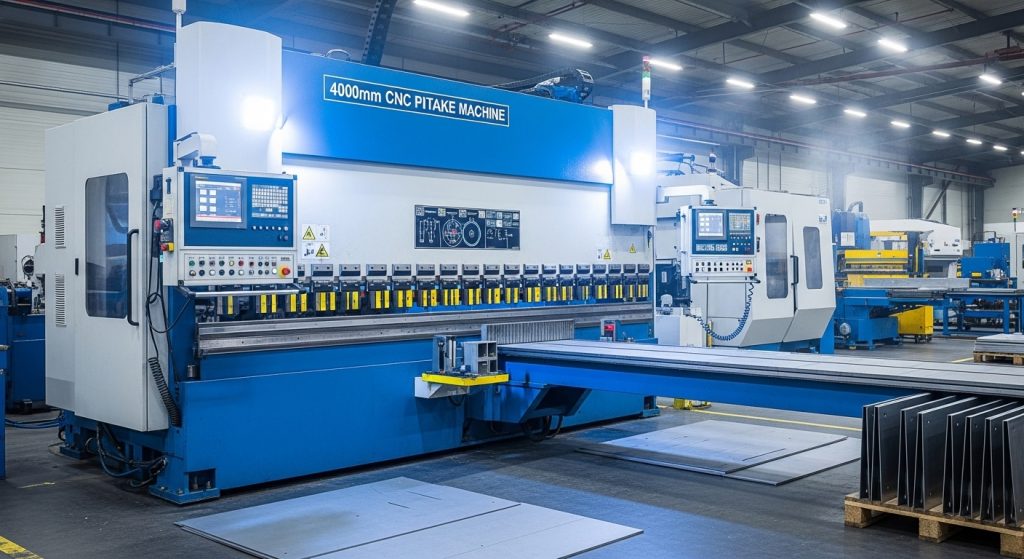
- Disposiciones de varias etapas: Puedes configurar una "Rugado" la, a "Finalización" la, y una "Bajo" Die todo en la misma cama de 4000mm. Esto permite al operador terminar una pieza compleja sin detener nunca la máquina para cambiar de herramienta.
- Comportamiento de asientos Long Die: Una cama de 4000 mm proporciona una Uniformidad de la superficie de asiento del troquel Eso asegura que las herramientas se mantengan perfectamente planas, incluso al doblar placas pesadas.
- Alineación de punzones: El Carril de distribución de carga con abrazaderas en una máquina de 4 metros está diseñada para mantenerse Seguimiento de recorrido vertical de punzonados, impidiendo que "Aturdimiento" Eso puede ocurrir cuando varios segmentos de herramientas se juntan a largo de una larga distancia.
Por qué los paneles largos pierden precisión geométrica sin soporte completo de la cama
Cuando una hoja metálica se hunde bajo su propio peso, el "Ángulo de entrada" Cambios en el dado. Esto crea un Deriva de curvatura en blanco inducida por la gravedad que el controlador CNC no siempre puede compensar si el material no está completamente soportado.
- Efecto Sagitación: Sin el Geometría de la cama extendida, El centro de la lámina cae, tirando de los bordes hacia dentro y provocando un Gradiente de pérdida de consistencia angular.
- Cambio de Retorno: En largos tramos, el Línea de desviación de recuperación de retorno no es uniforme. Los extremos de la pieza suelen saltar hacia atrás de forma diferente al centro debido a la falta de soporte lateral durante el impacto.
- Formación de la repetibilidad: Logrando Formación de forma de longitud completa con precisión requiere que el material se asiente perfectamente plano contra los medidores de fondo. En una máquina de 4000 mm, Múltiples dedos de fondo (a menudo de 4 a 6) Asegúrate de que el filo largo esté perfectamente paralelo a la línea de curvatura.
El rendimiento de producción aumenta cuando desaparecen los pasos de reposicionamiento
El retorno principal de inversión de una máquina de 4 metros es el Compresión en tiempo de producción takt. Eliminando la necesidad de parar, ¡Muévete, y realinear una pieza, El desarrollo de la tienda cambia fundamentalmente.
Antes (Máquina de 3200 mm):
- Paso 1: Dobla el lado izquierdo del panel de 4 m.
- Paso 2: Dos operadores giran y deslizan manualmente el panel pesado.
- Paso 3: Realinear contra los atrasos (A menudo tarda 2-3 minutos).
- Paso 4: Dobla el lado derecho y espera que la costura central se alinee.
Después (Máquina de 4000mm):
- Secuencia de formación de paso único: Carga la hoja de 4m una vez.
- Eliminación de interrupciones de preparación: Un golpe, Una parte perfecta.
- Índice de Continuidad del Flujo por Lotes: Alto; la máquina mantiene un ritmo constante sin que "Desorden" de piezas a medio terminar esperando ser reposicionadas.
Cuando un freno de presión CNC de 4000 mm es la opción financiera equivocada
A pesar de los beneficios, El andén de 4 metros no es para todas las tiendas. Debes evaluar tu Restricción de asignación espacial de instalaciones y la combinación de puestos.
- Operaciones de bajo volumen: Si tu "Parte larga" Los contratos solo aparecen una vez al mes, el Exposición a la utilización de la máquina en reposo puede que no justifique el mayor coste de capital.
- Producción de Partes Cortas: Si el 95% de tu trabajo está por debajo de 2 metros, Una máquina de 4000 mm es ineficiente. La RAM más grande es más lenta para ciclar y consume más potencia por carrera.
- Restricciones de espacio: Una máquina de 4000 mm suele requerir una cimentación especializada y mucho más espacio en el suelo para la manipulación de materiales, Aumentando el Ventana de riesgo de retraso en la recuperación de capital.
Cómo calcular el ROI antes de comprar un freno de presión CNC de 4000 mm
Para justificar la inversión, Usa un Coeficiente de reducción de la manipulación de mano de obra. Si una pieza de 4 metros tarda 15 minutos en una cama corta (con 2 personas) y 4 minutos en una cama larga (con 1 persona), Los ahorros son enormes.
- Ganancia de salida: Calcular el Salida por multiplicador de expansión por desplazamiento. La mayoría de los talleres ven un aumento del 30-40% en el rendimiento para piezas largas.
- Ahorro laboral: Estimar la reducción en horas-hombre. Moviéndose desde un "Teletransporte para dos personas" a una "Tobogán para un solo hombre" reduce significativamente los costes.
- Expansión de empleo: Uso Apalancamiento de adquisición de contratos en gran parte para licitar por empleos de infraestructuras o transporte que antes existían "sin comillas" Elementos.
Ejemplo: Si una máquina de 4000 mm ahorra 15 dólares en mano de obra/chatarra por panel y haces 20 paneles al día, Los 7 $,El ahorro anual de 200 es solo el comienzo; El verdadero valor son los $200k+ en nuevos contratos que ahora puedes cumplir.
Cuando se activan, los frenos de presión mejoran el manejo de grandes partes
Para piezas extremadamente grandes o pesadas, un Freno de prensa hacia arriba puede ser un cambio radical. Porque la viga inferior se mueve hacia arriba, La gravedad en realidad ayuda a mantener la lámina plana contra el dado, Reduciendo la necesidad de seguidores de hojas complejas. Esta configuración suele ser preferida en aplicaciones de 4 metros o más, donde la seguridad del operador y la colocación de materiales son las principales prioridades.
Cuando el freno de presión CNC de 3200 mm sigue siendo la opción más inteligente
Si tu instalación es escasa o tu producción se centra en un rango de 8 a 10 pies, a Freno de presión CNC de 3200 mm sigue siendo el más versátil "Polivalente." Ofrece una velocidad de ciclo más rápida para piezas más cortas y, al mismo tiempo, proporciona suficiente longitud para chapas industriales estándar, lo que lo convierte en la mejor opción para tiendas con una alta mezcla, Perfil de bajo volumen.
Cuando el acero inoxidable es de acero, las piezas largas requieren un mayor enfoque en la fuerza de conformado
Doblar 4 metros de acero inoxidable requiere un aumento masivo de tonelaje debido a la alta resistencia a la tracción del material. En estos casos, a Freno de presión CNC 200T suele ser el requisito mínimo para asegurarse de que la máquina no se apague a mitad de curva. Aquí es vital un cálculo preciso del tonelaje para evitar que la deflexión del marco supere la capacidad del sistema de corona para compensar.
Cuando la fabricación de placas pesadas requiere máquinas de 600 a 3000 T
Cuando tus partes de 4 metros se mueven de "Hojas" Para "Matrículas" (12 mm o más), Entras en el territorio de frenos de prensa hidráulicos pesados. Estos gigantes de 600T a 3000T están construidos con enormes profundidades de garganta y bastidores reforzados para soportar las extremas tensiones de la construcción naval, Fabricación de grúas, y una gran infraestructura.
3200mm vs 4000mm CNC Press Brake: El punto de interrupción de la mejora
Elegir la longitud adecuada es un equilibrio entre las necesidades actuales y la preparación para el futuro. Nuestro Comparación entre 3200mm y 4000mm desglosa las diferencias técnicas específicas en el recorrido del ancho de salida, Rigidez del bastidor, y logística de transporte para ayudarte a decidir