





Freno de presión CNC 200T para acero inoxidable: Guía de selección y configuración
El acero inoxidable es notoriamente difícil de formar en comparación con el acero dulce, caracterizada por su Alta resistencia al conformado a la tracción y una tendencia a luchar contra el carnero. Al pasar a la producción de acero inoxidable, Muchos equipos de fabricación se sorprenden al descubrir que su capacidad estándar de máquina es repentinamente insuficiente.
Este comportamiento se debe a las propiedades metalúrgicas únicas del material, que exigen una presión significativamente mayor para lograr los mismos resultados que el acero al carbono. En muchas tiendas profesionales, la máquina de la clase 200T es el punto de entrada para trabajos serios en acero inoxidable porque proporciona el amortiguador de fuerza necesario para manejar el Formación de zonas de picos de presión inherente a este material.
Curvar el acero inoxidable requiere un enfoque estratégico debido a varios desafíos específicos de cada material:
- Endurecimiento por trabajo superficial: El acero inoxidable se vuelve más duro y resistente a medida que se deforma, Aumentando la carga a mitad de carrera.
- Recuperación elástica: Alto Fuerza de retorno de la recuperación de la elasticidad significa que la pieza lo hará "Abre" Significativamente una vez que se libera la presión.
- Estrés en el radio de flexión: El acero inoxidable es propenso a agrietarse si el Concentración de esfuerzos en radio de flexión está demasiado ajustado para la pendiente.
- Fricción de herramientas: La dureza del material puede conducir a Agallado superficial, requería interfaces de chip especializadas.
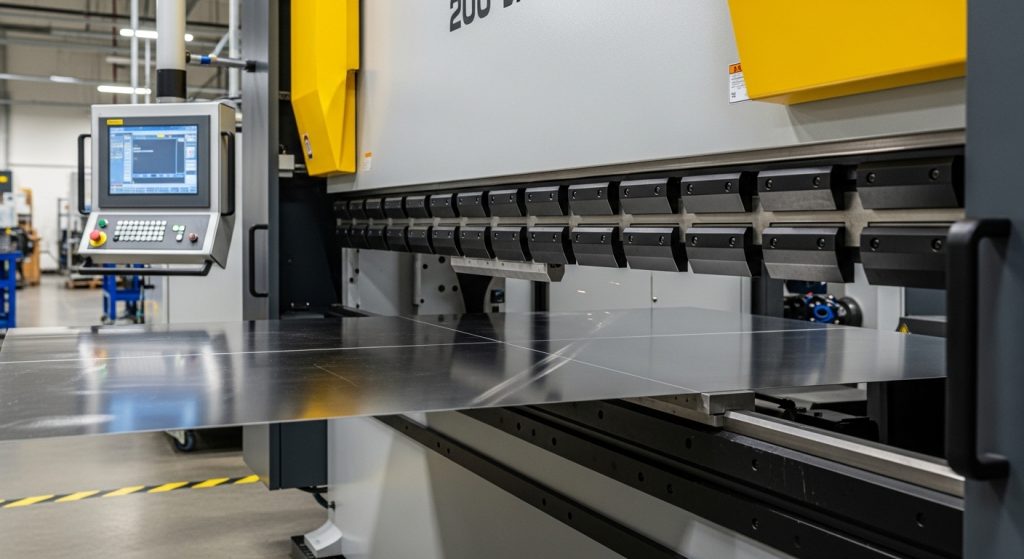
Por qué el doblado en acero inoxidable empuja a los talleres hacia una capacidad de freno de presión CNC de 200 toneladas
El principal factor detrás del requisito de 200T es el Aumento de la resistencia a la deformación plástica Que se encuentran en las aleaciones de acero inoxidable de las series 300 y 400. Mientras que el acero blando tiene un punto de fluencia predecible, El acero inoxidable posee un Comportamiento de extensión de la meseta de rendimiento que requiere una fuerza sostenida y creciente para alcanzar el ángulo deseado. En general, El acero inoxidable requiere entre un 50% y un 60% más de tonelaje que el acero dulce del mismo grosor.
- Resistencia a la tracción: Un mayor contenido de cromo y níquel aumenta la Umbral de absorción de esfuerzos del material, que requiere más potencia bruta para iniciar la curvatura.
- Escalado de carga: Una chapa de acero dulce de 4 mm podría doblarse fácilmente en una máquina de 100T, Pero una lámina de acero inoxidable de 4 mm llevará esa misma máquina al límite absoluto, riesgo de sobrecalentamiento hidráulico o fatiga del chasis.
- Planificación de los Margen de Seguridad: Operar en el 10% superior de la capacidad de una máquina provoca ángulos inconsistentes. Una máquina de 200T permite un Curva de escalada de presión de formación que se queda dentro de la máquina "Zona de confort," Asegurando una precisión repetible.
Trabajos reales de acero inoxidable donde el freno de presión CNC de 200T se convierte en requisito mínimo
En la fabricación industrial, ciertos sectores dependen de la plataforma 200T porque la combinación de grosor del material y longitud de la pieza hace obsoletas las máquinas de menor tonelaje.
- Paneles de Equipos de Calidad Alimentaria: Las encimeras gruesas de acero inoxidable y los fregaderos grandes usados en cocinas comerciales necesitan limpieza, largas curvas en material de 3mm+.
- Carcasas de procesamiento químico: Los recipientes y carcasas fabricados en acero inoxidable 316L deben mantenerse Tolerancias de fabricación de higiene industrial, que requiere el constante, Control de alta presión de un RAM de 200T.
- Recintos estructurales de acero inoxidable: Quioscos eléctricos exteriores o Revestimiento estructural resistente a la corrosión A menudo se usa acero inoxidable de 5 mm para asegurar la durabilidad, exigiendo alto tonelaje incluso para longitudes de brida cortas.
Estas aplicaciones requieren más que fuerza bruta; exigen el Requisitos de formación de equipos sanitarios donde la curva debe ser suave, Sin las microfracturas que pueden albergar bacterias o provocar corrosión.
Comportamiento de retroceso que cambia la configuración del freno de presión de acero inoxidable
Uno de los aspectos más frustrantes del acero inoxidable es su "memoria." El Desplazamiento de recuperación del módulo elástico en el acero inoxidable es mucho más pronunciado que en el acero al carbono, lo que lleva a una significativa Efecto de memoria de ángulo post-flexión.
- Causa: La alta resistencia en el límite elástico permite que el material retenga más energía elástica durante la flexión.
- Efecto: Una pieza doblada a 90° bajo presión puede volver a 95° o 100° una vez que el eje se retrae.
Caja de reglas de montaje de acero inoxidable:
Regla 1: Siempre programa para un Margen de compensación de sobreflexión angular (a menudo de 5° a 10°).
Regla 2: Usa un CNC con "Cálculo de retroceso" para ajustar el Desviación del desplazamiento del eje neutro automáticamente.
Regla 3: Asegúrate de que el dado se abra ($V$) es al menos 10–12 veces el grosor del material para reducir la presión y reducir el retroceso.
Cómo cambia la selección de herramientas para acero inoxidable en un freno de presión CNC de 200T
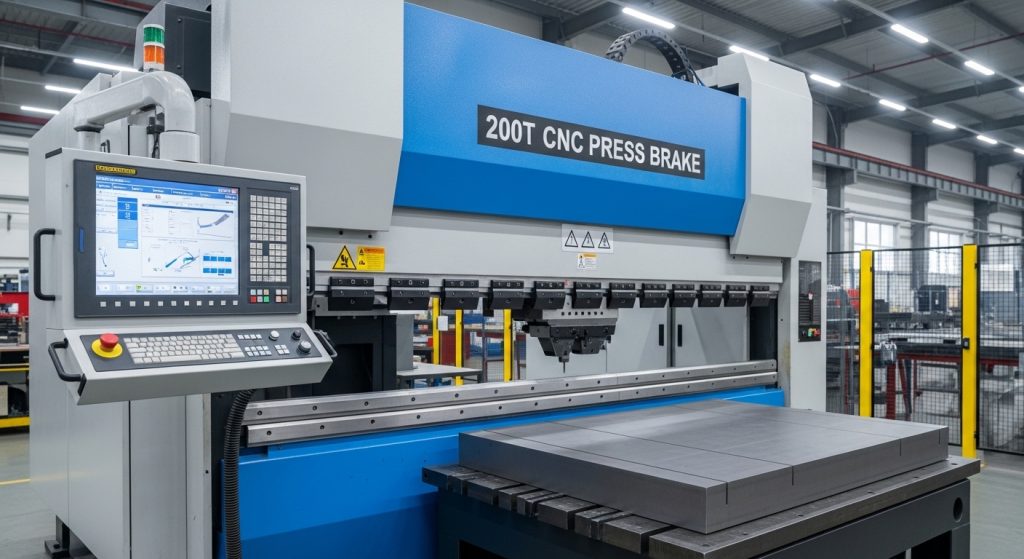
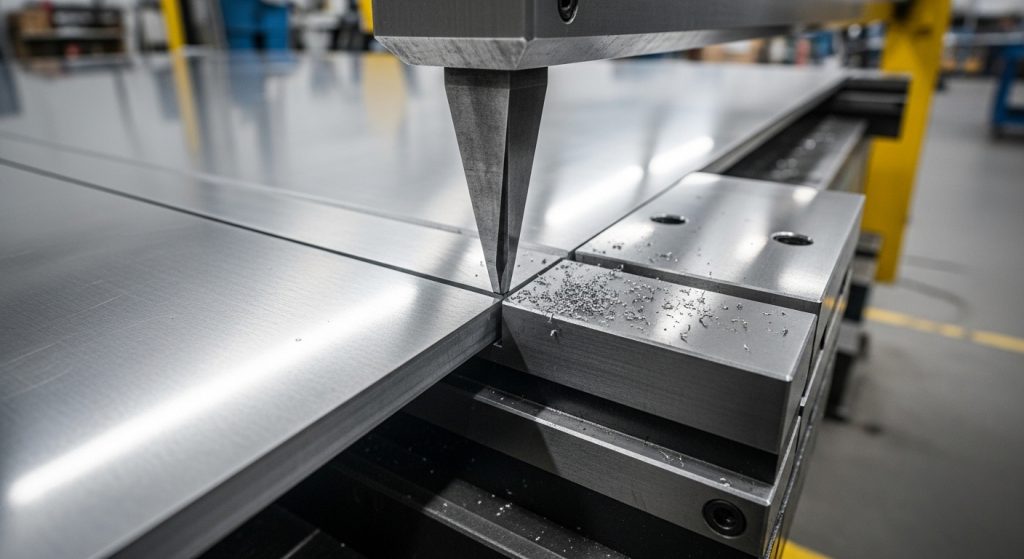
Usar herramientas estándar para acero inoxidable en una máquina de 200T es una receta para el desastre. El Concentración de presión en el hombro del dado puede causar que los troqueles estándar se deformen o "Mark" La cara superficie de acero inoxidable.
- Herramientas endurecidas: Las herramientas deberían tener un Clasificación de resistencia al desgaste por dureza de la herramienta de HRC 50 o superior para soportar la naturaleza abrasiva del acero inoxidable.
- Protección de la superficie: Para evitar un Interfaz de prevención de agallas superficiales, Muchas tiendas utilizan "No-Mark" Película o matrices sintéticas especializadas para evitar la transferencia de carbono de la herramienta al acero inoxidable.
- Tensión de apertura del troquel: Tenemos una máquina de 200T, el Zona de generación de calor por fricción de contacto es intenso. El uso de una abertura en V más grande distribuye este calor y presión, protegiendo tanto la herramienta como el acabado de la pieza.
Cómo el grosor del acero inoxidable multiplica rápidamente la demanda de carga
La física de la flexión dicta que, a medida que aumenta el grosor, la fuerza requerida crece exponencialmente, no de forma lineal. Éste Escalado de resistencia a la deformación de placas es la razón por la que una máquina de 200T suele ser el requisito mínimo para placas de más de 4 mm.
- Regla de grosor al cuadrado: La fuerza de flexión es proporcional al cuadrado del grosor del material ($S^2$).
- Escalada de la Fuerza: Duplicar el grosor del acero inoxidable de 3 mm a 6 mm no duplica la carga, sino que la cuadruplica.
- Riesgo de sobrecarga: Sin un Curva exponencial de fuerza formadora Cálculo, Es fácil activar accidentalmente la válvula de alivio hidráulico de una máquina.
| Espesor de acero inoxidable | Apertura V-Die | Tonelaje por metro (Aprox.) |
| 3mm | 24 mm | 35 toneladas |
| 4mm | 32mm | 48 toneladas |
| 5mm | 40mm | 62 toneladas |
| 6mm | 50mm | 75 toneladas |
Errores en la configuración que causan grietas en el acero inoxidable o daños en herramientas
El Resistencia al flujo de grano del material En acero inoxidable es sensible a la dirección de la curvatura y a la nitidez de las herramientas.
- Apertura de dados equivocados: Usar una abertura en V demasiado estrecha crea una Fallo localizado de picos de tensión, que puede romper un puñetazo o partir el material.
- Radio de puñetazo demasiado afilado: Si la punta del punzón es demasiado afilada, actúa como un cuchillo, creación Riesgo de rotura del borde de grano y grietas visibles en el exterior de la curva.
- Sin amortiguador de tonelaje: Ejecutar un trabajo de 190 toneladas en una máquina de 200T no deja espacio para el Respuesta en la etapa de endurecimiento del material, Potencialmente paralizando la máquina a mitad de curva.
Atentos Zonas de propagación de microfracturas—si ves "blanqueamiento" o pequeñas líneas en el exterior de la curva, Tu radio de punzón es demasiado pequeño o tu material demasiado duro.
Cuando el doblado de acero inoxidable necesita más de 200 T de capacidad
Mientras que un freno de presión CNC de 200 T es una potencia, Tiene sus límites, especialmente porque el Escalada de dureza en grado de placa aumentos en aleaciones especializadas como Duplex o grados de alto níquel.
| Factor | Quédate con 200T | Paso a 300T - 600T |
| Grosor del material | Hasta 6 mm (De larga duración) | 8mm - 20mm |
| Longitud de la curvatura | 3200mm a 4000mm | Más de 4000mm o tándem |
| Tipo de aleación | 304, 316, 430 | Dúplex, Super Dúplex, Inconel |
Si tu mezcla de producción está cambiando hacia Fuerza de deformación de acero inoxidable de gran calibre Requisitos, el bastidor del 200T acabará convirtiéndose en el cuello de botella. Para estas aleaciones de alto rendimiento, el Alto umbral de resistencia al límite elástico de la aleación es tan bueno que solo una máquina con significativamente más "Reserva" El tonelaje puede proporcionar la estabilidad, Resultados repetibles requeridos para la certificación industrial.
Cuando los frenos de presión tándem sustituyen a las máquinas 200T individuales
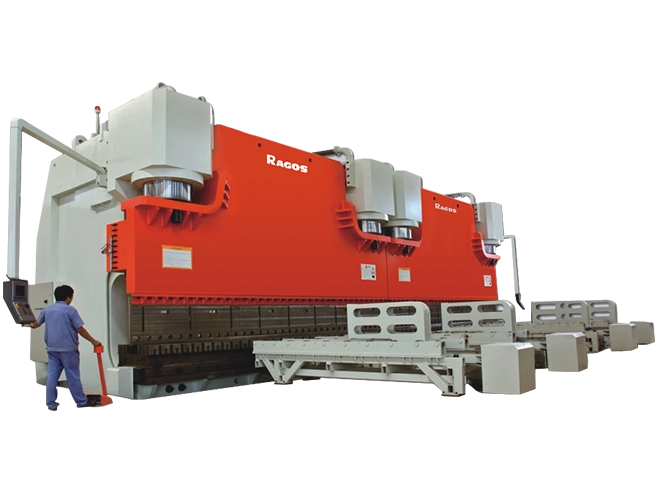
Para paneles largos de acero inoxidable que requieren tanto alto tonelaje como longitud extrema, Frenos de presión tándem ofrecer una solución única. Utilizando Conformado sincronizado multimáquina, Dos máquinas pueden trabajar juntas para compartir la carga. Éste Coordinación de doble flexión de marco es perfecto para postes de iluminación o secciones arquitectónicas largas que de otro modo requerirían una gran, Máquina única construida a medida.
Cómo la flexión de láminas de acero inoxidable de 10 mm cambia la planificación de las fuerzas
Doblar acero inoxidable de 10 mm es una operación de alto riesgo. El Presión de conformado de acero inoxidable de grosor medio Required es enorme, a menudo lo que requiere un Zona de transición de carga conformado en lámina Análisis. A este grosor, el Amplificación de la tensión en radio de flexión se convierte en un factor importante, y debes usar chips en V significativamente más grandes para gestionar el Respuesta en la etapa de endurecimiento del material. Aprende sobre el doblado de acero inoxidable de 10 mm
Cuando la placa de acero inoxidable pasa al rango 600T–3000T
Fabricación de placas industriales pesadas, como en las industrias del petróleo y gas o marítimas, requiere un Freno de prensa hidráulico 600T–3000T. Estas máquinas gestionan el Presión de deformación de la sección gruesa de aleación necesarios para recipientes a presión y cascos. Cuando el Demanda de conformado de acero inoxidable de calidad naval es alto, Estas máquinas de alta resistencia proporcionan la carga de compresión necesaria para moldear aleaciones de alta resistencia.
Elección de longitud 3200 vs 4000 al doblar paneles de acero inoxidable
La longitud de un panel de acero inoxidable afecta a su "rigidez" Durante la curva. Nuestro Comparación entre 3200mm y 4000mm explica cómo el Factor de rigidez de acero inoxidable a la longitud del panel influencias en el Efecto de rebote de acero inoxidable de panel largo. Elegir la longitud adecuada de cama es esencial para gestionar la Desplazamiento de precisión de conformado relacionado con el envergadura A lo largo de toda la parte.
Cuando los trabajos de acero inoxidable necesitan 4000 mm de longitud de freno de prensa CNC más tonelaje
Si tu trabajo implica paneles de acero inoxidable de 4 metros, Necesitas tanto espacio para la cama como la electricidad. A Freno de presión CNC de 4000 mm asegura Balance de formación de paneles largos de alto tonelaje. Esta configuración es fundamental para mantener Uniformidad de la distribución de esfuerzos en el canto largo, evitando que los extremos del panel se despierten de forma diferente al centro.